


Brilliance and Doubt
What If Self-Doubt is Not a Flaw?
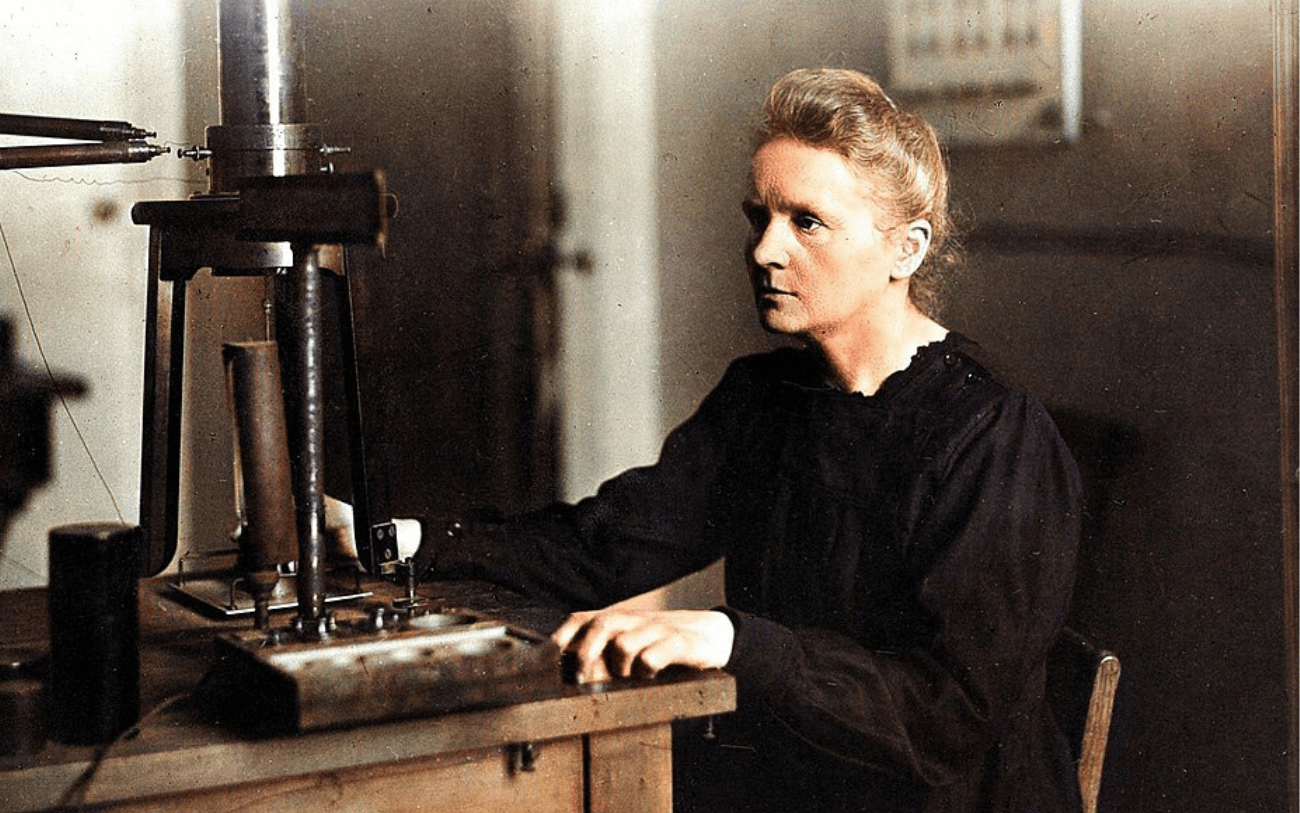
Marie Curie had already discovered two elements, pioneered research into radioactivity, and become the first woman to win a Nobel Prize.
Yet throughout her career she was repeatedly required to prove her credibility in ways her male peers were not.
Earlier in her career the scientific community doubted her results, questioned her legitimacy, and largely disregarded her contributions. Many of her peers initially believed her results faulty or assumed they were the work of her husband, Pierre.
Later, when her relationship with physicist Paul Langevin became public, the press and much of the scientific establishment turned on her. She was attacked as immoral and foreign, shouted at by crowds outside her home and even asked by the Nobel committee not to attend the ceremony for her second prize to avoid scandal.
She went anyway. Accounts from that period describe her as exhausted, ill, and pushed to the edge, and it is not hard to imagine that at points she doubted her reputation and place in the scientific community. She may well have felt like an imposter, not good enough, despite the evidence of her work.
What interests me is not only her achievement and her courage, but the pattern underneath. The coexistence of brilliance and doubt. Our need for approval, recognition, and belonging that drive us to keep proving ourselves even when the evidence already exists.
We tend to treat self-doubt as weakness and something we must get rid of.
But what if self-doubt is not a flaw?
Not Enough is a universal condition. Everyone experiences it in varying degrees and forms. It’s triggered by our experiences and influenced by systems, power, culture, and family.
In my work I don’t see Not Enough as a flaw, shame, or mindset problem to be fixed.
I see it as a hidden intelligence that organises perception, when we assume that something is missing, threatened, or unavailable, or that safety, belonging, or legitimacy must be earned, secured, or protected. Protection is the logic from which this intelligence reorganises itself.
For years, I have been mapping the patterns behind Not Enough.
When self-doubt activates, it’s easy to treat it as something that’s wrong or needing to change, and completely miss the intelligence it holds. But what if it’s more like an internal alarm, one that’s asking for direction rather than elimination?
Every Not Enough pattern, whether it’s self-doubt, perfectionism, people-pleasing, or overthinking, holds a form of archetypal hidden intelligence underneath to keep you safe, successful, or comfortable. These are the repeating patterns of thoughts, reactions and behaviours.
This is what I mean by hidden intelligence. Not that doubt is good or comfortable or something to celebrate. But that as a Not Enough pattern it carries information. And when we learn to recognise it, something shifts.
Marie Curie didn’t remove doubt from her experience. She continued her work alongside it. The rigour that made her science extraordinary and the doubt that may have made her question her own worth may well have been two expressions of the same underlying intelligence, a refusal to accept anything less than what she knew to be true.
She didn’t appear to overcome a sense of imposter so much as continue her work alongside the intelligence underneath her doubt. For some it asks:
Do you need more research? Do you need more practice? Do you need to apply judgement of enough, and rest?
Not Enough is intelligence asking for direction.
Public domain, CC BY-SA 4.0 <https://creativecommons.org/licenses/by-sa/4.0>, via Wikimedia Commons