


Another Room
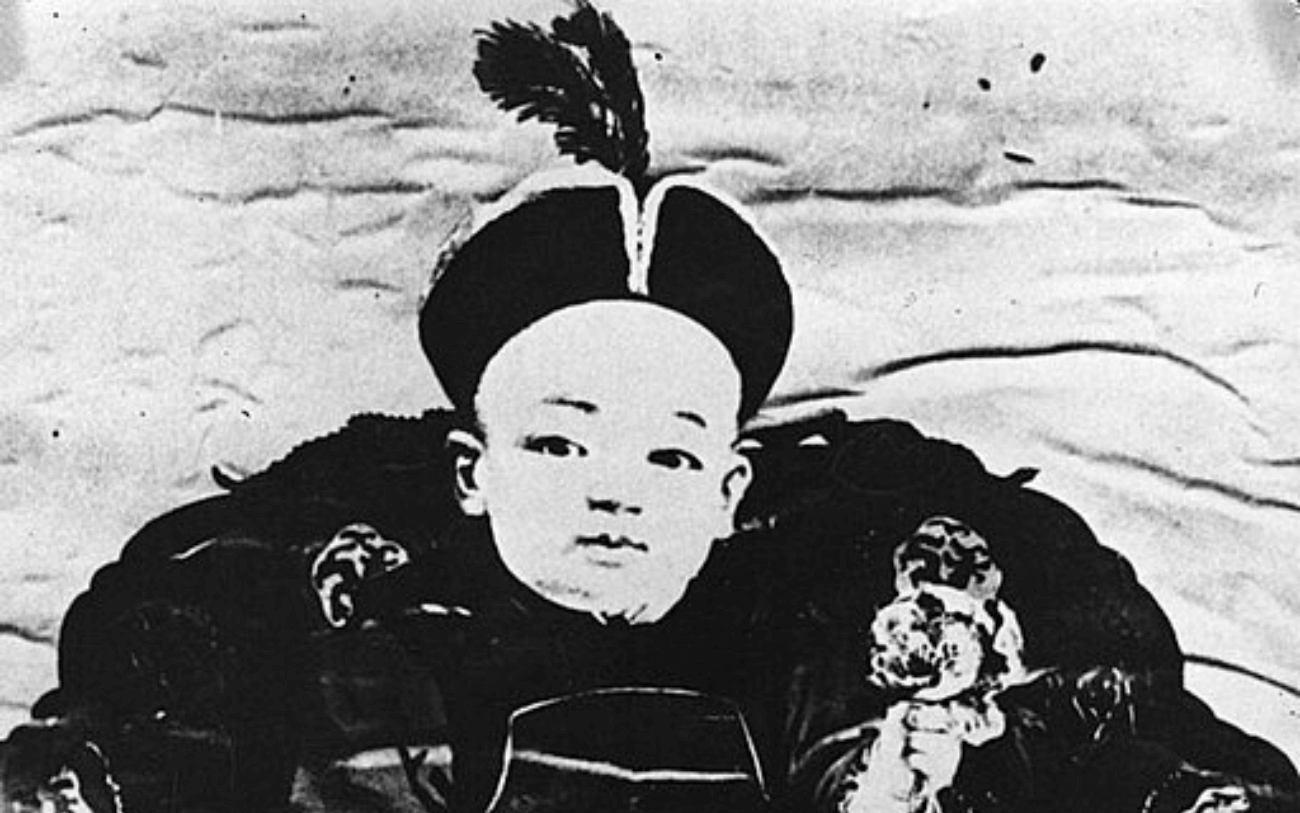
Puyi became Emperor of China at the age of two.
He was carried into the Forbidden City and placed on the Dragon Throne. He was too young to understand it. But from that moment, the walls of the Forbidden City became his world.
Outside those walls, China was changing. The Qing dynasty was collapsing and revolution was coming. The empire that had existed for centuries was ending.
Inside the walls, Puyi had tutors, servants, eunuchs, and ceremonies. He had a court that continued to operate as though nothing had changed. He was dressed as an emperor, addressed as an emperor, and treated as an emperor long after he had any power to speak of.
He grew up inside a structure that was invested in not facing reality.
When the Republic was declared, Puyi kept the title. When warlords took control of Beijing, he remained in the Forbidden City. When he was finally expelled at the age of seventeen, he moved into the foreign legation quarter and continued to hold court. Later, when the Japanese installed him as puppet emperor of Manchukuo, he accepted.
Each move can be read as a version of the same pattern. Find another place and keep the title. But don’t face the thing directly. The changed world.
This is The Avoider Archetype.
Puyi’s life is one illustration of The Avoider Archetype, rather than a verdict on who he was.
It operates from a belief that facing the uncomfortable thing directly will overwhelm you. So the intelligence finds another room. Another task. Another structure that feels safer than the one that is collapsing. This is Not Enough showing up as strategic redirection. The intelligence is trying to protect you from pain, confrontation, and the possibility of failure by keeping you occupied somewhere else.
This pattern’s intelligence senses overwhelm before it arrives and finds alternative routes, preserving energy in the face of pressure.
From the beginning, Puyi’s life was organised by forces far larger than his own choices. The Avoider pattern in him was shaped by history as much as by personality.
Puyi was not idle. He was always doing something. Studying English, collecting antiques, writing letters, playing tennis. He was constantly in motion, just not toward the thing that needed facing.
When The Avoider Archetype becomes overactive, it moves into its shadow. The Escapist.
The Escapist is not laziness. Its busyness is a distraction from what needs attention. Anything but that. Sometimes it’s an unconscious strategic diversion. The intelligence underneath says:
if I stay in motion elsewhere, I don’t have to face this uncomfortable thing.
But not all delay is avoidance. Sometimes the intelligence is reading the situation correctly. The timing is wrong. The conditions are not right. Something is not yet ready to be faced. The discernment is knowing the difference between the two.
The Escapist keeps you occupied without moving you forward. The conversation stays postponed. The decision stays in draft. The thing that needs facing stays just out of reach, while everything around it gets attention.
This is survival intelligence on overdrive. It is a form of self‑protection, not a moral failure.
Puyi spent decades in that loop. The Forbidden City. The legation quarter in Tianjin. Manchukuo. Each structure a new room to occupy while the real question waited outside.
He wasn’t a coward. He was a person whose intelligence had learned, from the very beginning of his life, that the walls were safer than what lay beyond them.
But The Avoider Archetype also carries a gift. The Conservator.
The Conservator is the same intelligence, but now anchored in conscious choice. It still senses overwhelm and it still knows when to step back. But the stepping back serves a purpose. It preserves energy for what actually matters. It chooses battles with discernment. It finds creative routes through difficulty without using those routes to hide.
The Conservator knows the difference between rest and avoidance. Between strategic withdrawal and permanent redirection. It protects energy so that when the thing that matters arrives, there is something left to meet it with.
Late in his life, Puyi worked as a gardener in Beijing. He tended plants. He lived quietly. Some accounts describe him as more at peace in those years than he had ever been inside the Forbidden City. The man who had spent his life avoiding the ordinary finally lived inside it.
It wasn’t the life he had been dressed for. But it may have been the first life that was actually his choice.
The Conservator is not an upgrade from The Avoider, it is the same intelligence allowed to stand in its full dignity.
The Avoider is not a flaw. It seeks discernment for action, direction, timing or conditions.
Image: Puyi (溥儀), 1908 oil-painting portrait (public domain), from Wikimedia Commons: https://commons.wikimedia.org/wiki/File:溥儀,_繪畫肖像.jpg.