

You may recognise yourself in other ‘not enough’ syndrome archetypes and that’s normal. But based on your responses today, this archetype appears to be the most active pattern shaping your ‘Not Enough’ stories right now.
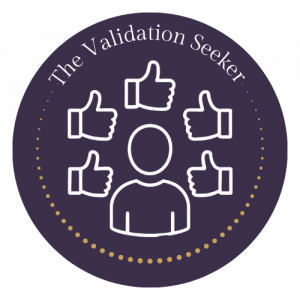
You are currently The Validation Seeker – a skilled connector who learned early to gauge your worth through others’ responses. This was brilliant social intelligence. Your ability to read feedback, adapt to expectations, and create positive impressions is a genuine superpower.
Fear of worthlessness Your core need: Confirming your value through external recognition and approval
You’re the one who builds rapport easily, responds well to feedback, and creates connections that matter. Your sensitivity to others’ responses helps you navigate social situations and build meaningful relationships.
Lady Gaga (performing for connection), Robin Williams (using humour for acceptance), Marilyn Monroe (seeking love through admiration).
At its core, The Validation Seeker operates from the belief: I’m not inherently valuable or worthy on my own. To feel like I matter, I need constant confirmation from others. Their approval is proof of my existence and worth.
This drives you to seek approval and praise as evidence of your worth, making others’ opinions more important than your own self-knowledge.
We are storied creatures. What we believe, what we do, how we live – every inch of our experiences are storied and it’s how we make sense of and move through our world.
But some stories deserve to go. You know, the way your mood shifts based on how many likes your post gets, the fishing for compliments when you’re feeling uncertain, the need to check with three different people before trusting your own judgement.
If people aren’t actively showing me approval and praise, it means I’m not valuable or worthy. I need external confirmation to know I’m enough. If I don’t perform well, people won’t respect me. My achievements are the only way to be seen as worthy. If everyone’s happy with me, then everything’s fine.
If you recognise yourself in these stories, you’re not flawed. And you’re not alone. They are universal. There was a time when seeking approval was how you stayed safe and ensured belonging. It made sense then. But relying on validation now keeps you chasing reassurance instead of trusting your own worth. The very pattern that once helped you feel connected has turned into a dependency on other people’s opinions.
When The Validation Seeker operates unconsciously, it can transform into The Attention Seeker – the part of you that craves constant spotlight and recognition. You may find yourself:
The Validation Seeker pattern expresses through many other shadow behaviours, each one a coping strategy and a different way of avoiding internal worth.
The Attention Seeker shadow isn’t vanity. It’s your survival system ensuring safety by securing recognition and belonging. From early on, being noticed may have been the way to receive love or avoid being overlooked.
At its core, this pattern is about connection. When understood, it’s less about craving validation and more about staying safe in visibility.
When you use The Validation Seeker archetype consciously, you become The Connector – someone who builds authentic relationships and creates meaningful engagement through genuine care for others’ responses. Your gift includes:
When you harness this gift consciously, using your sensitivity to feedback for authentic connection and meaningful collaboration – whilst maintaining your own internal worth, you’re not seeking validation from fear. You’re creating connection from wholeness.
The Connector gift is your ability to build bridges, foster trust, and create community. You naturally make people feel seen and valued, drawing them into spaces of belonging.
This is your hidden genius, the power to connect people and ideas in ways that amplify impact and deepen relationships.
Can you recall a time you felt deeply satisfied without praise or approval? What made that moment different, and how did you find your own sense of worth inside it?
When does seeking validation become compulsive? What triggers the need for external approval?
Can you pause before seeking reassurance and check in with yourself first?
Whose opinion actually matters to your life? What do you think about your own efforts?
Try completing something without sharing it immediately - sit with your own satisfaction first.
When did it first feel like love and worth depended on other people’s approval?
What one gift could you channel over 30 days and celebrate at the end?
This pattern is part of your ego, which exists to support you. The Validation Seeker archetype isn’t something to eliminate – it’s an invitation to change your relationship with it.
Instead of seeking validation from a place of “not enough,” you can consciously use your connection superpower for meaningful collaboration, authentic relationship-building, or strategic networking – all without depending on others’ approval for your sense of worth.
You move from needing validation to appreciating recognition. You become someone who values feedback and connection whilst maintaining an internal sense of worth that doesn’t fluctuate based on others’ responses.
Keep exploring: Connect with me on LinkedIn, where I share regular insights about Not Enough Syndrome™ and the Archetypes.
Go deeper: Book an Unstoried® Insight Session: A focused 90 minutes where we decode your archetype, separate shadow from gift, and create a path to working with your pattern consciously.
I work with clients and leaders to become Unstoried® from the repeating narratives of “I’m not good enough,” “I’m not smart enough,” “I don’t know enough,” or not [fill-in-the-blank] enough that can erode confidence. These are not flaws. They are coded brilliance stuck on overdrive. When you bring them to light and rebalance them, you gain clarity, confidence, and direction as you harness their gifts and power.
With over 20 years of mentoring and coaching experience, and having walked this path myself, I bring both expertise and lived wisdom to help you dissolve these stories and step into authentic authority and personal sovereignty.